Why Dental Website Design Decides Whether Your Marketing Works
Dental website design is the piece most practices get backwards. They spend on ads and SEO to drive people to the site, then lose those visitors the moment they land — because the site is slow, dated, hard to use on a phone, or gives no clear reason to book. Your website is the destination every other marketing dollar points toward. If it doesn’t convert, everything upstream leaks.
This guide covers what actually makes a dental site convert: the structure, speed, trust signals, and SEO foundation that turn a visitor into a booked appointment. It pairs with our complete SEO for dentists guide for the full strategy, and if you’d rather have it built and handled for you, our SEO for dentists service page lays out the scope.
A Pretty Site Isn’t the Goal — A Booking Machine Is
Most dentists judge a website by how it looks. Patients judge it by how fast it answers one question: can this practice help me, and how do I book? A beautiful site that hides the phone number, buries hours, and takes six seconds to load will lose to a plainer site that loads instantly and puts a “Book Appointment” button front and center.
Good dental website design starts from the patient’s goal, not the designer’s portfolio. Every page should make the next step obvious. That single shift — designing for the booking, not the beauty award — is what separates sites that produce patients from sites that just exist.
The Non-Negotiables: Speed and Mobile
Two technical factors sit underneath everything else, because if you fail them, nothing else matters.
Speed. A large share of visitors leave a page that takes more than about three seconds to load, and every extra second of load time costs you conversions. Site speed is also a ranking factor, so a slow site loses on both fronts — fewer people ranking in, and more of them bouncing before the page even appears. Fast hosting, compressed images, and clean code aren’t luxuries; they’re the price of entry.
Mobile. Most dental searches happen on a phone — often from someone in pain who needs an appointment now. If your site is hard to read, tap, or navigate on a small screen, you lose that patient to a competitor whose site works. Google also indexes the mobile version of your site first, so a poor mobile experience drags your rankings too. Mobile-first isn’t a preference anymore; it’s the default your whole site should be built around.
If your current site fails either test, that’s the first thing worth fixing — and it’s exactly what proper web design addresses from the ground up.
The Structure That Ranks and Converts
How a dental site is organized affects both how well it ranks and how easily patients find what they need. A strong structure follows a simple logic:
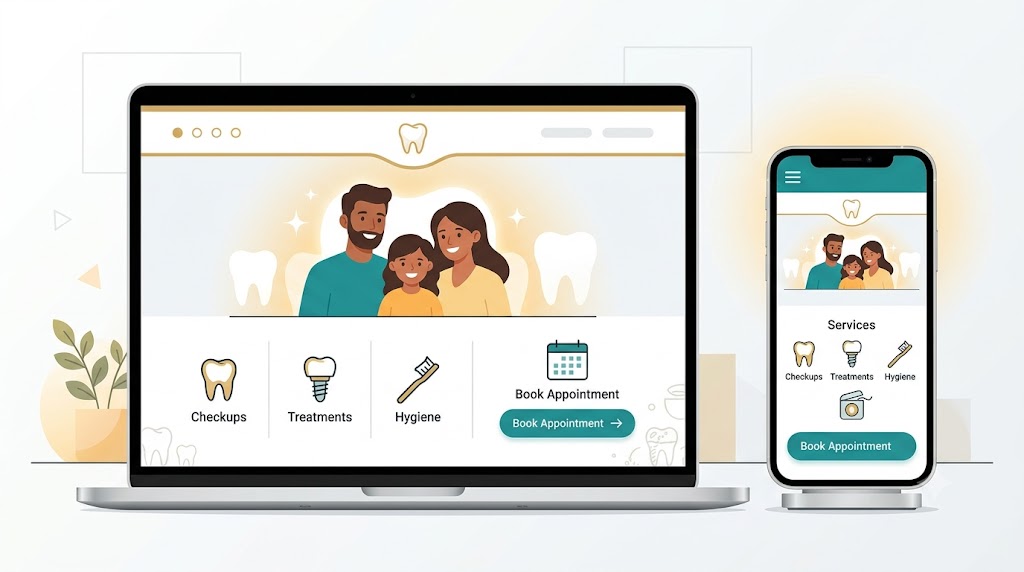
A homepage that orients, not overwhelms. It should make three things instantly clear: who you are, what you offer, and how to book. A prominent phone number and booking button belong above the fold, visible without scrolling.
A dedicated page for every major service. One page each for implants, cosmetic dentistry, Invisalign, emergency care, and so on. This matters twice over: patients get detailed answers, and Google gets a specific page to rank for each treatment search. A single “Services” page listing everything ranks for nothing well. Emergency care deserves particular attention here — our guide to emergency dentist SEO breaks down exactly what that page needs.
Clear, persistent contact options. Phone number in the header on every page, tappable on mobile, plus hours, address, and a booking link that’s never more than a click away.
A logical hierarchy. Homepage → service pages → supporting content, with sensible internal links between them. This helps patients navigate and helps search engines understand what your site is about. For dental groups with more than one office, this hierarchy gets more complex — our guide to multi-location dental SEO covers how to structure location pages correctly.
Trust Signals: The Quiet Conversion Drivers
Choosing a dentist is a trust decision, and your site either builds that trust in seconds or loses it. The elements that reassure a hesitant visitor:
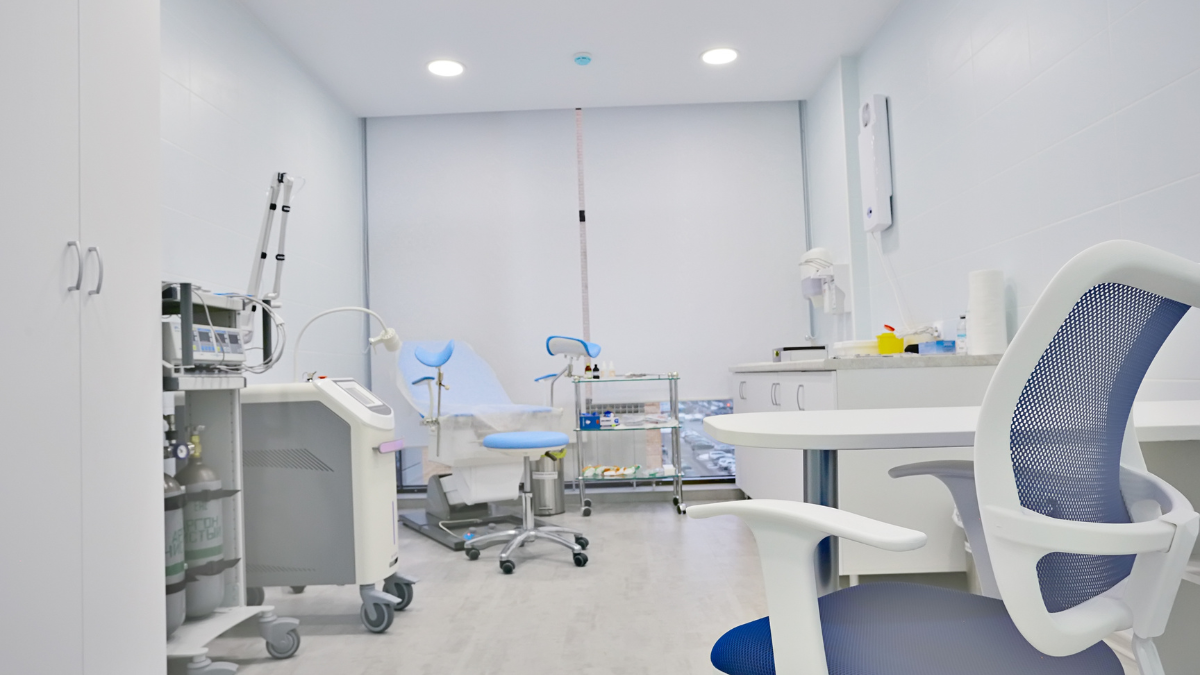
Real photos. Genuine images of your office, team, and reception — not stock photos of models. Patients want to see where they’re going and who they’ll meet.
Reviews and ratings on the page. Surfacing your best patient reviews directly on the site (not just on Google) reinforces credibility at the moment of decision.
Provider credentials and bios. Dentistry is a YMYL — “Your Money or Your Life” — field, meaning Google and patients both hold health sites to a higher standard of trust. Clear bios, credentials, and experience signal legitimacy to both.
Insurance and payment clarity. A simple list of accepted insurance and financing options removes one of the biggest silent objections a patient has before calling. Consistency matters beyond your own site too — see our guide to dental citations and NAP consistency for how mismatched directory listings can undercut even a well-designed site.
Easy, obvious booking. Online booking or a tappable call button on every page. Every extra step between “interested” and “booked” costs you patients.
Where Design and SEO Meet
Dental website design and SEO aren’t separate projects — a well-built site is the foundation SEO stands on. The same choices that make a site convert also make it rank:
Fast, mobile-friendly pages rank better and convert better. A logical structure with dedicated service pages gives search engines something specific to rank and gives patients something specific to read. Clean code and proper technical setup — schema markup, correct headings, indexable pages — let search engines understand and trust the site. And a fast, credible site keeps visitors engaged, which itself feeds rankings.
Build the site right and SEO has a foundation to work on. Build it poorly and even great SEO pours patients into a leaky bucket. That’s why website work and search engine optimization are best planned together rather than bolted on after the fact.
Common Dental Website Mistakes That Cost Patients
Even expensive-looking sites routinely make conversion-killing errors:
Slow load times. Usually caused by huge uncompressed images or cheap hosting. Invisible until you measure it, but constantly costing you visitors.
Hidden or non-tappable phone number. On a mobile-heavy, urgency-driven audience, a phone number that isn’t one tap away is lost revenue.
No dedicated service pages. Cramming every treatment onto one page means ranking for none of them well.
Outdated design. A site that looks like it’s from a decade ago makes patients quietly doubt the practice, however good the dentistry is.
No clear call to action. A visitor should never have to hunt for how to book. If the next step isn’t obvious, most people simply leave.
Should You Redesign or Repair?
Not every practice needs a full rebuild. If your site is fundamentally sound — fast, mobile-friendly, well-structured — it may just need targeted fixes: better service pages, stronger calls to action, added trust signals. If it’s slow, dated, not mobile-friendly, or built on a structure that can’t rank, a rebuild is usually the better investment than patching something that’s working against you.
The deciding question is simple: is your current site helping patients book, or getting in the way? An honest speed test, a look at it on your own phone, and a check of whether every service has its own page will tell you quickly. If you’re also weighing the overall investment, our breakdown of SEO for dentist pricing covers where website work fits into the total.
Frequently Asked Questions
How much does a dental website cost?
A professional dental website build typically runs $3,000–$10,000+ depending on the number of pages, custom design, and features like online booking. It’s usually a one-time project cost, separate from ongoing SEO.
Do I need a new website or just SEO?
It depends on your current site. If it’s fast, mobile-friendly, and well-structured, SEO can build on it. If it’s slow, dated, or poorly organized, a redesign is often the better first step — SEO can’t fix a site that repels visitors.
How important is mobile for a dental website?
Critical. Most dental searches happen on phones, and Google indexes the mobile version of your site first. A poor mobile experience hurts both conversions and rankings.
How long does a dental website take to build?
Most practice sites take a few weeks to a couple of months, depending on scope, how quickly content and photos are provided, and the level of custom design.
Ready for a Website That Actually Books Patients?
If your site looks fine but isn’t producing calls, or it’s overdue for a rebuild, get in touch and we’ll design a dental website built to convert — and built on an SEO foundation from day one.
Eagles Media Enterprises
400 Ravinia Pl Suite B, Orland Park, IL 60462
(708) 526-8484
As a full-service SEO company, Eagles Media Enterprises helps dental practices rank higher, get found, and book more patients.